Wupatki National Monument
Cierre Información Ver 2 alertas actuales
Alertas actuales (2)
-
Cierre
Road Closure: Sunset Crater Volcano September 21 through October 26
Beginning September 21, Forest Road 545 will close to all vehicle traffic starting near the intersection with Highway 89A to the Sunset Crater Volcano entrance kiosk for culvert work. Sunset Crater Volcano National Monument remains OPEN and accessible via Forest Road 545 through Wupatki National Monument. Plan for extra travel time—the drive between visitor centers is about 19 miles/30 minutes. The road is expected to reopen October 26. Weather delays may extend the estimated reopening.
Más información del parque: Road Closure: Sunset Crater Volcano September 21 through October 26
-
Información
Wupatki VC Phone Outages
The main phone line for the visitor center experiences occasional outages. Please email FLAG_Information@nps.gov if you have trouble getting through on the main number.
Horarios
Park Hours
| Todos los días | Sunrise to Sunset |
|---|
The Wupatki National Monument Visitor Center is open 9:00AM to 4:30PM MST March 8th- November 1st. The visitor center is closed Tuesdays through Thursdays November 2nd- march 7th and is closed for December 25th and January 1st.
Trails to Wupatki, Wukoki, Citadel, Nalakihu, Box Canyon, and Lomaki Pueblos are open daily from sunrise to sunset.
Centros de visitantes
Wupatki Visitor Center
Wupatki Visitor Center
| Todos los días | 9:00AM - 4:30PM |
|---|
Próximamente:
- 16 nov. – 26 nov.: Visitor Center Closed Nov 16-27 (cerrado)
- 26 nov.: Visitor Center Closed Thanksgiving Day (cerrado)
- 27 nov. – 7 mar.: Winter Hours- Closed weekly Tuesday-Thursday
The visitor center is open daily with exceptions during extreme weather conditions and select holidays. The visitor center is closed Tuesdays-Thursdays from November 2nd through March 7th.
Sobre este parque
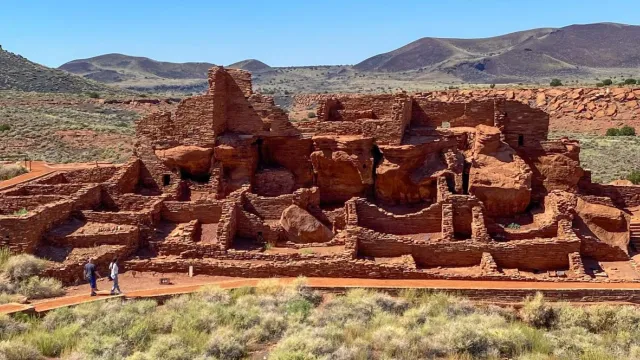
Nestled between the Painted Desert and ponderosa highlands of northern Arizona, Wupatki National Monument is an unlikely landscape for a thriving community. The early 1100's marked a time of cooler and wetter weather, when the ancestors of contemporary Pueblo communities created a bustling center of trade and culture. For indigenous peoples, these sites represent the footprints of their ancestors.