Kalaupapa National Historical Park
Closure Information See 4 current alerts
Current alerts (4)
-
Closure
Kalawao County Restrictions
Access to the park, including Kalawao County, the Kalaupapa Trail, the settlement, and Waikolu Valley, is restricted to residents and visitors with approved permits issued by Hawaii State Department of Health. Violations will result in arrest/fine.
-
Information
Phones Are Not Operational
We continue to experience intermittent outages with our phone lines. If your call does not go through, please try again later, or try to leave us a message and we will get back to you. Thank you for your understanding.
-
Information
Arrival by Boat
It is prohibited to come within 1/4 mile of the Kalaupapa shoreline. Access by boat within the quarter mile offshore park boundary requires a special use permit.
-
Information
Unmanned Aircraft
Launching, landing, or operating an unmanned aircraft from or on lands and waters administered by the National Park Service within the boundaries of Kalaupapa National Historical Park is prohibited. This includes model airplanes, quadcopters, and drones.
Hours
Park Hours
| Every day | All Day |
|---|
Kalaupapa National Historical Park is home to an active community of people, including patient-residents and State and Federal employees. Because of this, there are no park opening or closing hours, though tours are only given during daylight hours. Visitation is restricted in accordance with Hawai'i State Law. All visitors must have a permit.
About this park
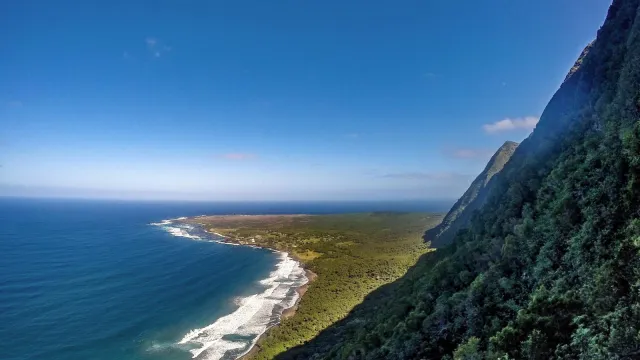
When Hansen's disease (leprosy) was introduced to the Hawaiian Islands, King Kamehameha V banished all afflicted to the isolated Kalaupapa Peninsula on the north shore of Molokai. Since 1866, more than 8,000 people, mostly Hawaiians, have died at Kalaupapa. Once a prison, Kalaupapa is now a refuge for the few remaining residents who are cured but were forced to live their lives in isolation.