Little Bighorn Battlefield National Monument
Information See 2 current alerts
Current alerts (2)
-
Information
Primary Phone Line is Experiencing Intermittent Service Disruptions
The primary phone line is experiencing intermittent service disruptions. If you are unable to reach staff, please email us at libi_information@nps.gov. Please understand that emails will not be answered immediately. The park's website will have the most up-to-date information.
-
Information
Oversized Vehicles are Unable to Park in Visitor Center Parking Lot
Due to construction, oversized vehicles will not be allowed to park in the visitor center parking lot due to lack of space and ability to turn-around safely. There is oversized parking along the main park road.
More from the park: Oversized Vehicles are Unable to Park in Visitor Center Parking Lot
Hours
Little Bighorn Battlefield National Monument Seasonal Hours
| Every day | 8:00AM - 4:00PM |
|---|
Coming up:
- Nov 26: Closed for Thanksgiving (closed)
Little Bighorn Battlefield National Monument winter season hours begin after Labor Day, September 8th.
The temporary contact station, bookstore, entrance gate, and Custer National Cemetery are open from 8:00 am to 4:00 pm.
The 4.5 Mile Tour Road, Last Stand Hill, the Indian Memorial, the Reno-Benteen Entrenchment and Deep Ravine Trail are open from 8:00 am to 3:30 pm. There is no access after 3:30 pm to any of the listed areas.
Visitor centers
Little Bighorn Battlefield Visitor Center
Little Bighorn Battlefield Visitor Center
| Every day | 8:00AM - 4:00PM |
|---|
Visitors can access the contact station and bookstore from 8:00 am to 4:00 pm except Thanksgiving Day, Christmas Day, and New Year's Day.
Visitor center page on nps.gov: Little Bighorn Battlefield Visitor Center
About this park
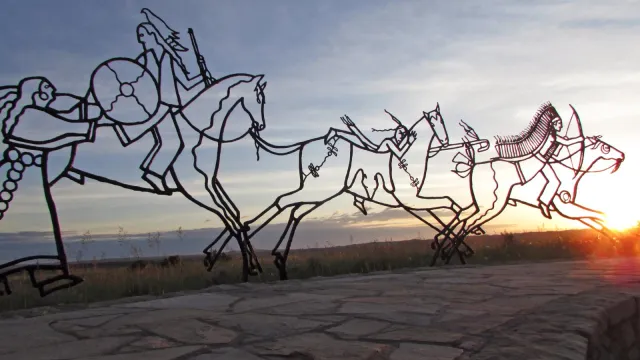
This land is a place to honor and reflect on the sacrifices made here on June 25 and 26, 1876, when Lakota, Cheyenne, and Arapaho warriors fought against a deliberate attack by the U.S. Army's 7th Cavalry, led by Lt. Col. George Custer, who sought to enforce policies that threatened their traditional way of life. How are the results of the battle felt in the West and Indigenous communities today?