Reconstruction Era National Historical Park
Closure See 1 current alert
Current alerts (1)
-
Closure
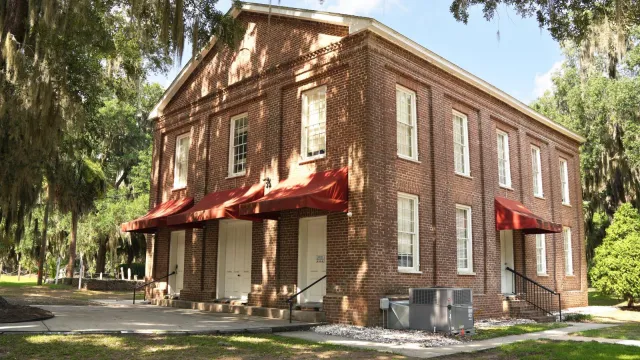
Darrah Hall Temporarily Closed Starting 10/14/2026
Darrah Hall will be closed for a construction rehabilitation project on the building starting Wednesday October 14, 2026.
Hours
Park Hours
| Every day | 9:00AM - 5:00PM |
|---|
Coming up:
- Nov 11: Veterans Day
- Nov 26: Thanksgiving Day (closed)
The park grounds are open daily from sunrise to sunset. In addition, the park maintains several visitor centers and contact stations throughout the region.
Visitor centers
Reconstruction Era National Historical Park Visitor Center
Reconstruction Era National Historical Park Visitor Center
| Every day | 9:00AM - 5:00PM |
|---|
Coming up:
- Nov 11: Veterans Day
- Nov 26: Thanksgiving Day (closed)
The park visitor center at 706 Craven Street is open every day from 9 am to 5 pm.
Visitor center page on nps.gov: Reconstruction Era National Historical Park Visitor Center
Darrah Hall Closed today
Darrah Hall
Today: Closed (Construction Closure, Oct 14 – Nov 11)
Usual hours
| Monday | Closed |
|---|---|
| Tuesday – Saturday | 9:00AM - 5:00PM |
| Sunday | Closed |
Coming up:
- Nov 11: Veterans Day
- Nov 26: Thanksgiving (closed)
Darrah Hall is the oldest building on the campus of the Penn Center. The NPS manages Darrah Hall as a visitor contact station. As of the summer of 2021, it is open Tuesday - Saturday from 9 am to 5 pm.
Pinckney-Porter's Chapel Visitor Contact Station
Pinckney-Porter's Chapel Visitor Contact Station
| Monday – Friday | Closed |
|---|---|
| Saturday | 9:00AM - 5:00PM |
| Sunday | Closed |
Coming up:
- Nov 11: Veterans Day (closed)
- Nov 26: Thanksgiving Day (closed)
Pinckney-Porters Chapel Visitor Contact Station is located at the Naval Heritage Park across from Naval Hospital Beaufort. It is open Saturday from 9 am to 5 pm.
Visitor center page on nps.gov: Pinckney-Porter's Chapel Visitor Contact Station
About this park
The Reconstruction era,1861-1900 the historic period in which the United States grappled with the question of how to integrate millions of newly freed African Americans into social, political, economic, and labor systems, was a time of significant transformation. The people, places, and events in Beaufort County, South Carolina, reflect on the most important issues of this tumultuous time period.