Brown v. Board of Education National Historical Park
Closure Information See 2 current alerts
Current alerts (2)
-
Closure
Please Pardon Our Dust
For much of September and October, the Visitor Center at Brown v. Board of Education National Historical Park will have portions of the sidewalk and courtyard closed for renovations. Visitors will still have access to the building and museum. Please be cautious of ongoing construction and follow any signs or guidance to the safest routes into the building. Accessible parking will be available in the front of the building, though it may be limited. Please call the Visitor Center with questions: 785-354-4273
-
Information
I-70 Closure in Downtown Topeka May Affect Travel to the Park
I-70 is closed through downtown Topeka between Topeka Boulevard and 8th Avenue due to construction. Visitors traveling to Brown v. Board of Education National Historical Park should allow extra travel time and follow posted detours. Westbound visitors may continue on I-70 and follow signs to local exits near downtown Topeka. Eastbound visitors should use I-470 around Topeka, then connect to local streets to reach the park at 1515 SE Monroe Street. Check KanDrive.gov or call 511 for current road condition
Hours
Visitor Center
| Monday | Closed |
|---|---|
| Tuesday – Saturday | 9:00AM - 5:00PM |
| Sunday | Closed |
Coming up:
- Nov 26: Thanksgiving Day (closed)
We are currently open Tuesday through Saturday. We are closed for Thanksgiving, Christmas, and New Year's Day.
Visitor centers
Visitor Center
Visitor Center
| Monday | Closed |
|---|---|
| Tuesday – Saturday | 9:00AM - 5:00PM |
| Sunday | Closed |
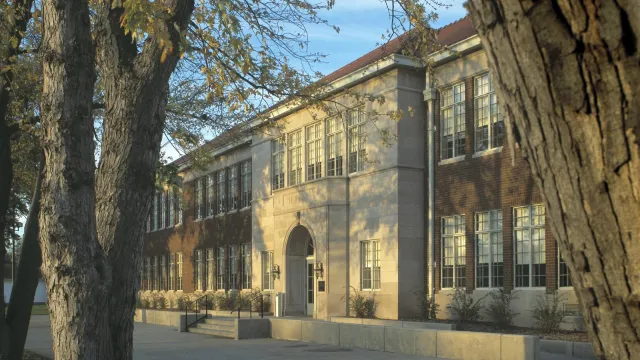
Located inside the Monroe School Building itself, the Brown v. Board of Educational National Historic Site Visitor Center houses most of the exhibits as well as the bookstore.
About this park
The path to equality has been anything but smooth. It's taken courage and dedication by everyday people coming together for a common goal to carry the country toward true equality. Parents, teachers, secretaries, welders, ministers, and students drove their communities, and the country along with them, toward justice in a series of often unsteady turns leading to the Brown v. Board decision.