Petroglyph National Monument
Caution Information See 3 current alerts
Current alerts (3)
-
Caution
Be City Smart: Take precautions to secure your vehicle and valuables.
This is an urban park. Don't hide valuables inside your car. Carry items with you on hike. Lock your vehicle and set car alarm. Report suspicious persons loitering/peeking in cars. Call 928-638-7805
-
Information
Attention Visitors, Cab drivers, Uber drivers, and transportation service drivers
DO NOT drop off your passengers at the visitor center. No trail access. Visitors must be driven to a trail system from the visitor center. If passengers want to go to the visitor center, WAIT FOR THEM in the parking lot until they come back out.
-
Information
Bicycle Use In The Monument
Bicycles are ONLY allowed at the following locations: 1 - On the Boca Negra Canyon paved multiuse path; bicycles must remain on the paved bike path. 2 - On the crusher fine trail that winds in and out of the park around the mesa top above Boca Negra.
Hours
Boca Negra Canyon
| Every day | 8:30AM - 4:30PM |
|---|
Coming up:
- Nov 26: Thanksgiving Day Closure (closed)
Staffed by our partner, the City of Albuquerque Open Space, this developed trail system consists of 3 short, paved trails with trail markers. Full-service restroom facility, picnic tables, shaded seating areas and a shaded patio area. See up to 100 petroglyphs in one hour if you walk all 3 trails. Last entry is at 4:00 pm daily and all visitors are swept out at 4:30 pm sharp. Pets not allowed on the petroglyph viewing trails. Trails are not accessible for wheelchairs or strollers.
Rinconada Canyon
| Every day | Sunrise to Sunset |
|---|
Water is not available. A 2.2-mile round trip trail where up to 300 petroglyphs can be viewed, especially in the back of the canyon. The natural earth surface trail is easy to moderate to walk. Picnic tables are located in the parking lot. A vault toilet is available. Open for hiking on holidays. Parking lot hours: 8 am to 5 pm daily. Access: Sunrise to sunset by parking in outer lot (3 spaces). Lock your vehicle, secure your valuables, do not leave any items visible. Leashed pets okay, must pick up poop.
Piedras Marcadas Canyon
| Every day | Sunrise to Sunset |
|---|
Nestled in the northernmost tip of the monument, this undeveloped trail system is a 6.5-mile drive from the information center. The petroglyph viewing trail is 1.5 miles in and out. No water, no restroom, no amenities available. See up to 400 petroglyphs. Leashed pets allowed, pick-up waste & put in trash can. The non-gated parking lot is located off Golf Course Rd. at Jill Patricia St. (behind the Valvoline Motor Oil station, use Google maps). Stop by the information center for a free trail guide.
Volcanoes Day Use Area
| Every day | Sunrise to Sunset |
|---|
No petroglyph viewing available. Parking lot hours: 9 am to 5 pm daily. Access: Sunrise to sunset. 1 to 4 miles of hiking trails lead you to the scenic overlook or around the bases of the cinder cones. Hiking to the tops of cones is prohibited. No water available. Vault restroom, benches, and trash cans available. Leashed pets allowed. Owners must pick-up waste & place in trash can. Parking lot is located off Atrisco Vista Blvd. (exit #149) about 4.7 miles north of I-40. Pick up a trail map at Info Center.
Visitor centers
Petroglyph Information Center
Petroglyph Information Center
| Every day | 8:30AM - 4:30PM |
|---|
Coming up:
- Nov 26: Visitor Information Center Closed (closed)
Information only. No trails. All petroglyph viewing trails are a 1-7 mile drive from the visitor center. Get a park brochure, trail map, and safety information. A Western National Parks Association Park store is available. Access, Military, and 4th Grader passes are issued. If you arrive after 4:30 pm, hike Piedras Marcadas (9501 Golf Course Rd NW), a 1.5 mile loop or Rinconada Canyon (Unser Blvd. & St. Joseph) sunrise to sunset, park outside gate, 2.2 mile loop, 300 petroglyphs, no water.
About this park
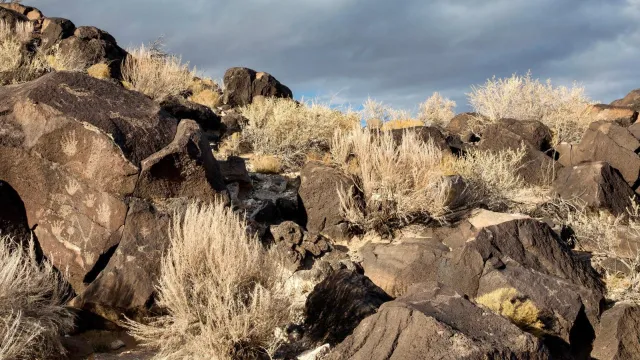
Petroglyph National Monument protects one of the largest petroglyph sites in North America, featuring designs and symbols carved onto volcanic rocks by Native Americans and Spanish settlers 400 to 700 years ago. These images are a valuable record of cultural expression and hold profound spiritual significance for contemporary Native Americans and for the descendants of the early Spanish settlers.